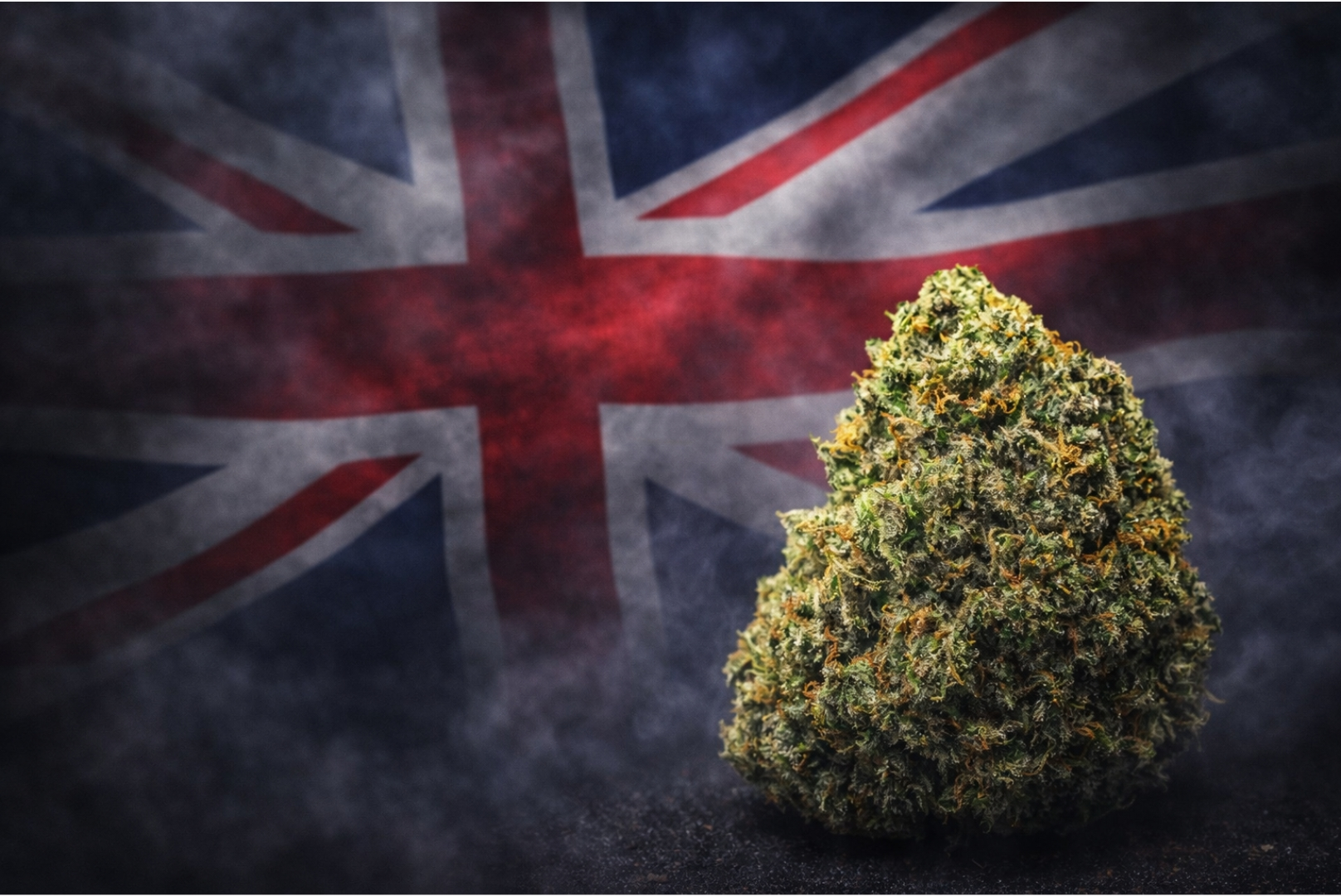

The question “is CBD flower legal in the UK” is one of the most searched and misunderstood topics in the British cannabis space. Despite CBD itself being legal, widely sold, and regulated, CBD flower continues to sit in a confusing legal grey area that affects businesses, consumers, banks, and even law enforcement.
What makes this issue especially complex is that enforcement is inconsistent, the law itself is outdated, and real-world outcomes often depend on interpretation rather than clarity.
This article shares both the legal context and my first-hand experience navigating that grey area.
Why CBD Flower Sits in a Legal Grey Area
CBD was effectively decriminalised in the UK when it was recognised as a non-psychoactive compound and later regulated under novel foods for ingestible products. However, the Misuse of Drugs Act, written in the 1970s, still treats the cannabis plant itself as a controlled substance regardless of THC content.
CBD flower is derived from legally grown hemp strains that contain less than 0.2 percent THC. Chemically, it is non-intoxicating. Legally, however, the flower remains problematic because the law focuses on the plant material rather than the compound extracted from it.
This creates a contradiction where CBD oils, capsules, vapes, and cosmetics are legal, but the raw flower from which many of those products originate is treated differently.
Even police officers themselves often acknowledge the lack of clarity. In my own case, the law cited during arrest was read directly from a brief online search rather than from specialist guidance, highlighting how unclear enforcement guidance can be in practice.

My First-Hand Experience With UK CBD Flower Enforcement
Before Herbaleyes became an editorial platform, I previously operated two CBD-focused businesses, Herbaleyes and Strain Station, the later of which was later sold. Those ventures provided first-hand experience of the realities of operating within the UK CBD flower market during a period of legal uncertainty. I no longer operate or participate in the sale or distribution of CBD products. Today, Herbaleyes exists solely as an independent media, review, and commentary platform.
During that period, a parcel containing CBD flower was seized by customs. The delivery address was separate from the business operations address, yet that location was later raided by police.
When I became aware of the situation, I voluntarily handed myself in. I was arrested and taken into custody. The CID officer involved was professional and understanding. He openly stated that, ethically, he could see no wrongdoing and recognised that CBD products are used by many people for genuine health and wellbeing reasons. However, he also made it clear that his role was to enforce the law as written, not to interpret its intent.
I was held in a cell for several hours while waiting for my solicitor. On advice, I gave no comment during questioning and was released pending investigation.
What Happens During a CBD Flower Investigation
Following the arrest, the case remained open for months. At one stage, I was informed that the police intended to issue an outcome that was more serious than a warning but not a conviction. I was asked to sign paperwork without first consulting my solicitor, which I refused.
The situation then stalled. My solicitor became unresponsive, and even the investigating officer struggled to make progress. This limbo lasted over a year.
Eventually, I received a call from the officer with what he described as good news. A senior officer had reviewed the case, questioned why it was still unresolved, and decided to close it entirely.
The final outcome was No Further Action (NFA). The investigation was formally closed with no charges, no caution, and no conviction.
It is worth noting that prior seizures of CBD-related products had occurred before this case, but none were properly recorded. Had they been, the outcome may have been different. This again highlights how inconsistent record-keeping and enforcement can materially affect outcomes.

The Risk for Businesses Operating in the UK
Some CBD flower sellers in the UK have faced full prosecutions, court cases, and convictions. Others have had convictions overturned on appeal. Meanwhile, a number of CBD flower shops continue to operate openly.
The difference often comes down to visibility and business model. Shops that displayed open jars of flower for customers to smell and select were far more likely to be shut down. Those that operate discreetly using pre-packaged, sealed mylar bags have largely avoided attention.
Beyond criminal risk, there is also financial risk. In some cases, bank accounts have been frozen or seized during investigations, with individuals left on strict living allowances while cases are ongoing. Laptops, phones, passports, and driving licences can also be seized during raids, even if no charges ultimately follow.
CBD flower can be a highly profitable sector, but the constant uncertainty forces operators to ask whether the financial upside is worth the ongoing risk of enforcement.
The Risk for Consumers Using CBD Flower
The legal ambiguity does not only affect businesses. Casual users who possess CBD flower for personal use, including those using it for anxiety, pain, or sleep, can still technically be arrested if it is found on them.
This is why individuals who rely on cannabis-based products for health reasons are strongly encouraged to apply for a Cancard or explore medical cannabis prescriptions where appropriate. While not a guarantee, these can provide an added layer of protection and clarity during police encounters.
Why the Law Needs Clarification
The core problem is that CBD law has evolved, but the Misuse of Drugs Act has not. A modern regulatory framework exists for CBD extracts, yet the plant itself remains stuck in legislation written decades before CBD was understood.
This leaves police officers, courts, businesses, and consumers all operating without clear guidance. When enforcement relies on interpretation rather than statute, outcomes become inconsistent and often unfair.
Clarity would benefit everyone involved, including law enforcement.

Where Herbaleyes Stands Today
Herbaleyes no longer sells or distributes CBD products. It exists solely as an independent editorial, review, and commentary platform focused on CBD, cannabis culture, and the wider industry.
The purpose of sharing this experience is not to encourage risk-taking, but to provide transparency, context, and lived insight into an issue that affects thousands of people across the UK.
CBD flower sits at the intersection of outdated law, evolving culture, and genuine health use. Until legislation catches up with reality, that grey area will remain.